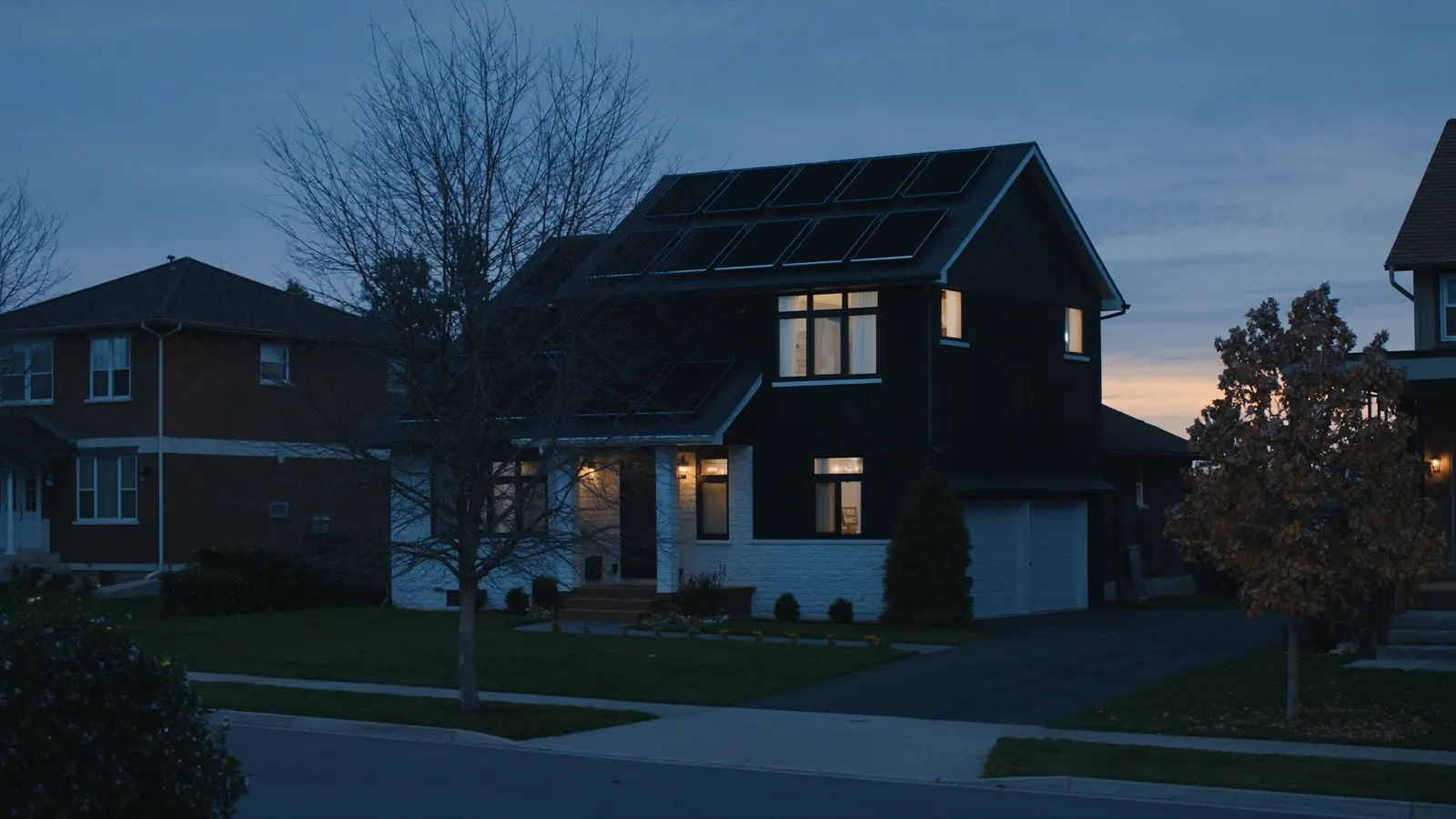
Solar and battery backup for Ontario homes.
A battery keeps your essentials running when the grid goes down. Add panels and it refills itself in daylight, so a long outage doesn't run it flat.
How they compare.
| Question | Home battery | Standby generator |
|---|---|---|
| Fuel | None. Charges from the grid or solar. | Natural gas, propane or diesel. |
| Noise and exhaust | No engine, no exhaust. | Engine noise and exhaust outdoors. |
| Switches on | By itself. | By itself, with a transfer switch. |
| Upkeep | Little. | Regular engine service. |
| Runtime limit | Stored energy, refilled by panels in daylight. | Fuel supply. |
Start with what can't go off.
Most plans start with a small backed-up panel for the essentials: fridge, sump pump, furnace fan, a few lights and the internet. That keeps one battery going longest.
Whole-home backup covers everything, but big loads like an electric stove or air conditioning drain a battery fast. We show you both runtimes in writing.
Pre-approval first.
Ontario's Home Renovation Savings program pays $300 per kWh of battery storage, up to $5,000 and no more than half the cost, with written pre-approval before you buy.
Source: homerenovationsavings.ca
About the install.
Where does the battery go?
Usually on a wall in the basement or garage, near your electrical panel.
Can I add panels later?
Yes. We plan the wiring so panels can be added without redoing the battery install.
What happens when the power comes back?
The battery hands back to the grid by itself and recharges, ready for the next outage.
Do you pull the electrical permit?
Yes, and we book the inspection.
Keep the lights on next time.
We walk the house, list what has to stay on, and send a written plan with a price. Nothing to sign on the day.